
The Almanac
Honey
The Sweetness of Connection
Few ingredients tell a larger story than honey.
It begins with flowers.
Moves through the quiet work of thousands of bees.
And arrives in our kitchens carrying the landscape from which it came.
No two honeys are exactly alike.
The blossoms visited, the changing seasons, the surrounding trees, the weather, and even the soil all leave their signature within the final harvest. Honey is one of nature's purest expressions of place.
That is what first drew me to it.
Not simply its sweetness, but the realization that honey is never just one ingredient.
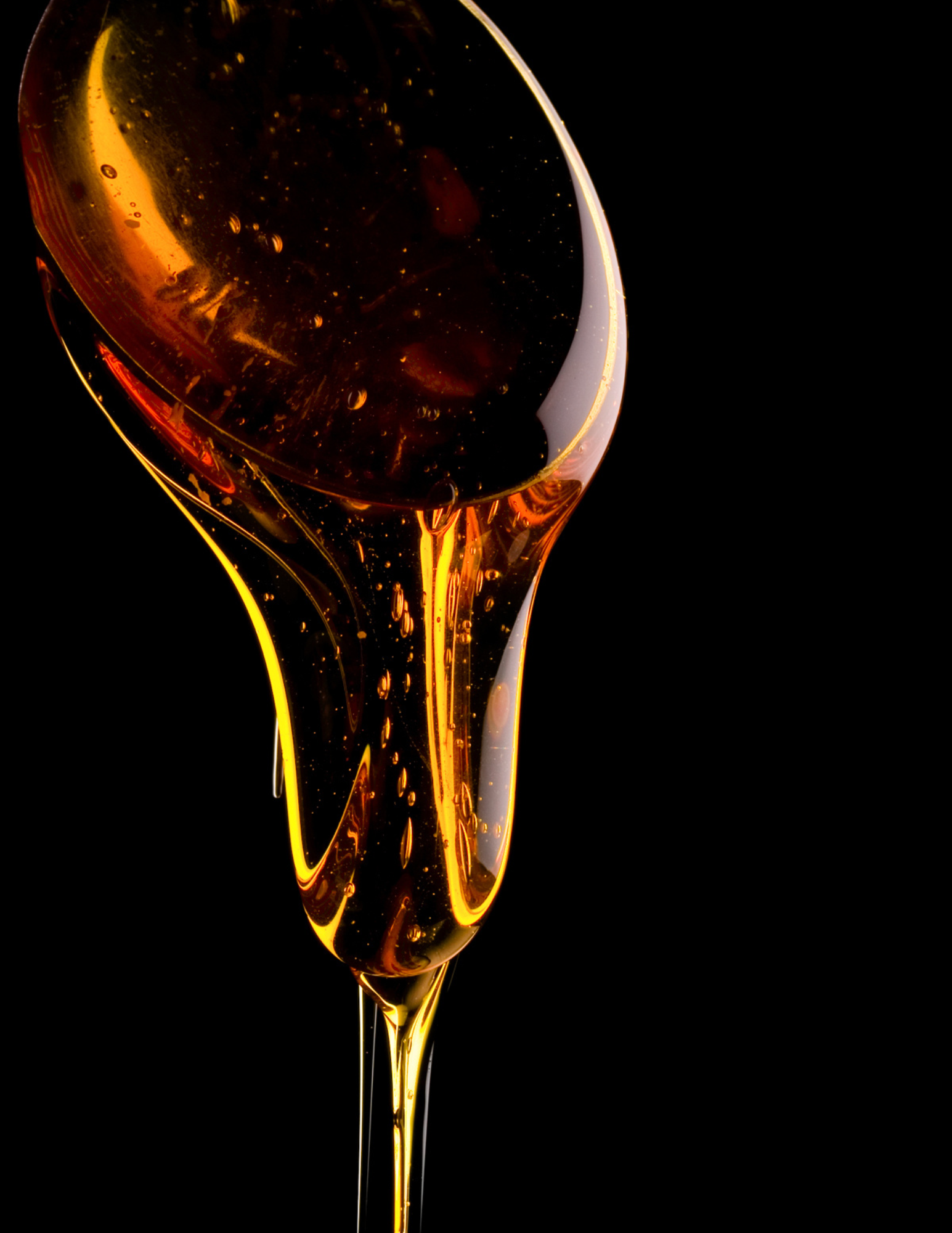
It is an entire landscape, captured in a single spoonful.
More Than Sweetness
Long before refined sugar became common, honey was treasured across cultures as both nourishment and medicine.
For centuries it has been valued for its natural antimicrobial properties, antioxidant compounds, and soothing qualities. Traditional herbal practices have used honey to comfort sore throats, support wound healing, preserve botanicals, and carry the flavors of herbs and spices.
Modern research continues to explore many of these properties, particularly the role of honey's naturally occurring enzymes, polyphenols, and antioxidants. While different varieties vary in composition, honey remains one of the most remarkable ingredients created entirely through nature's collaboration.
A Symbol of Abundance
Across history, honey has represented prosperity, generosity, and the sweetness of life.
In Ancient Egypt, it was considered a sacred offering.
In Greek mythology, it was associated with wisdom and divine nourishment.
Many cultures have shared honey during celebrations, weddings, and seasonal festivals as a symbol of joy, hospitality, and good fortune.
Perhaps this is why sharing honey feels instinctively comforting.
It has always represented more than flavor.
It represents care.
A Lesson from the Hive
When I think about honey, I rarely think about sweetness first.
I think about connection.
Every jar exists because countless small actions worked together.
Flowers bloomed.
Bees gathered nectar.
The seasons changed.
Time did its work.
Nothing was rushed.
There is something deeply reassuring about that process.
Honey reminds me that meaningful things are rarely created all at once.
They are built slowly, through patience, repetition, and quiet collaboration.
That lesson extends far beyond the kitchen.
It has shaped the way I approach recipe development, creative work, and even the pace at which LU'EMBER continues to grow.
Why It Matters
Honey has taught me to think differently about ingredients.
Instead of asking,
"How sweet is it?"
I ask,
"Where did this come from?"
"What flowers shaped it?"
"How will it change the atmosphere of this recipe?"
Different honeys bring entirely different personalities to a composition.
A delicate wildflower honey behaves differently than orange blossom.
Buckwheat honey carries an entirely different depth than clover.
The ingredient remains the same.
The story changes.
Field Notes
Botanical Origin
Collected from flowering plants through the work of honeybees (Apis mellifera).
Traditionally Associated With
Abundance • Hospitality • Patience • Nourishment • Community
Pairs Beautifully With
Cardamom • Pear • Apple • Citrus • Rosemary • Lavender • Vanilla • Brown Butter • Hazelnut • Black Tea