
The Almanac
Cardamom
A Small Pod with a Remarkable Story
Few ingredients have stayed with me as consistently as cardamom.
Long before it became one of my favorite baking spices, it captured my attention through candle making, where I began exploring the relationship between botanicals, aroma, atmosphere, and memory. That curiosity eventually led me into centuries of culinary traditions, herbal practices, and the remarkable history carried within this small green pod.
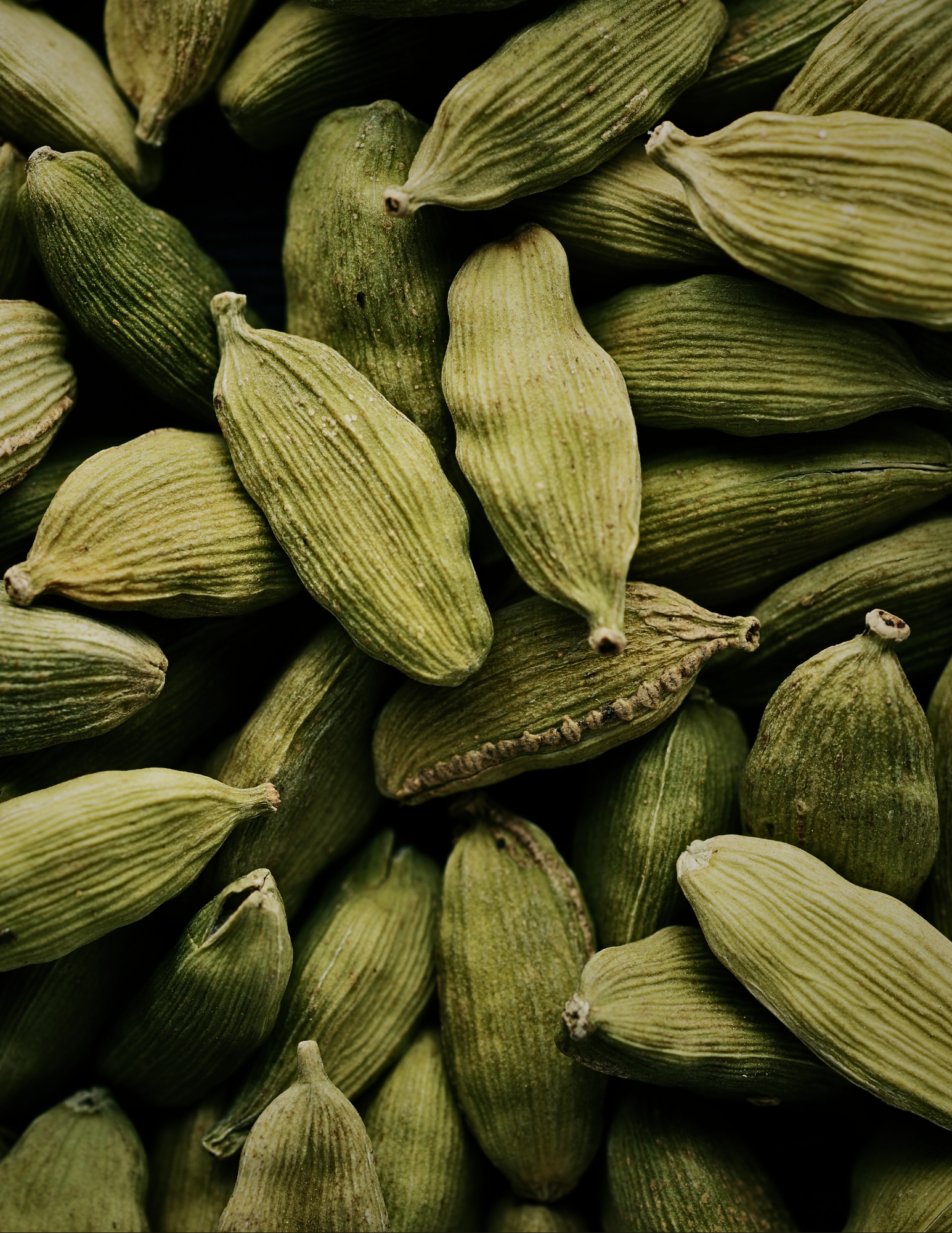
Often called the Queen of Spices, cardamom has been treasured for thousands of years throughout India, the Middle East, and Scandinavia. It appears in festive breads, warming teas, fragrant coffees, curries, desserts, and ceremonial gatherings, carrying with it a sense of hospitality, generosity, and quiet abundance.
What fascinates me most is that cardamom rarely becomes the loudest ingredient in a recipe.
Instead, it brings harmony.
It softens bitterness, brightens citrus, deepens honey, enriches chocolate, and gives warmth to vanilla, pears, apples, and coffee without overwhelming them. Rather than demanding attention, it encourages every surrounding ingredient to become more fully itself.
Perhaps that is why I return to it so often.
It reminds me that balance is rarely created through excess.
It is created through thoughtful composition.
More Than Flavor
For centuries, cardamom has been valued in traditional Ayurvedic and herbal practices for its warming, comforting nature. It has long been associated with digestive wellness, respiratory support, oral health, and overall vitality, while modern research continues to explore many of the aromatic compounds naturally present within the spice.
Whether enjoyed in tea, baked into bread, or infused into syrup, cardamom offers more than flavor—it invites a slower, more intentional experience.
For me, that has always been its greatest lesson.
A Botanical with a Story
Across cultures, cardamom has become a symbol of welcome, generosity, and connection.
In many Middle Eastern homes, serving cardamom-spiced coffee is an expression of hospitality and respect.
In Hindu tradition, cardamom has long been associated with abundance, celebration, and blessing.
Scandinavian baking weaves the spice into seasonal breads and pastries, where its comforting aroma has become deeply connected to family traditions and winter gatherings.
Although these stories come from different places and cultures, they all share something remarkably similar:
Cardamom has always been less about the spice itself and more about the people gathered around it.
Why It Matters
When I began studying botanicals, I thought I was simply learning ingredients.
What I discovered instead was that every botanical carries multiple stories.
There is the story of its flavor.
The story of its aroma.
The story of the cultures that have cherished it.
And the story of how it changes the experience of sharing food.
Today, cardamom continues to shape the way I develop recipes—not because I consider it a signature ingredient, but because it reminds me that the smallest details often create the greatest sense of warmth.
Field Notes
Botanical Name
Elettaria cardamomum
Traditionally Associated With
Hospitality • Warmth • Abundance • Balance • Celebration
Pairs Beautifully With
Honey • Pear • Apple • Citrus • Coffee • Vanilla • Dark Chocolate • Black Tea • Pistachio