Vanilla Soak
Vanilla Cake Soak
A neutral soak designed to carry moisture and softness through each layer.
Components
– Water
– Sugar
– Vanilla extract or vanilla bean
Yield: About 1 cup—enough to lightly soak a 3–4 layer cake
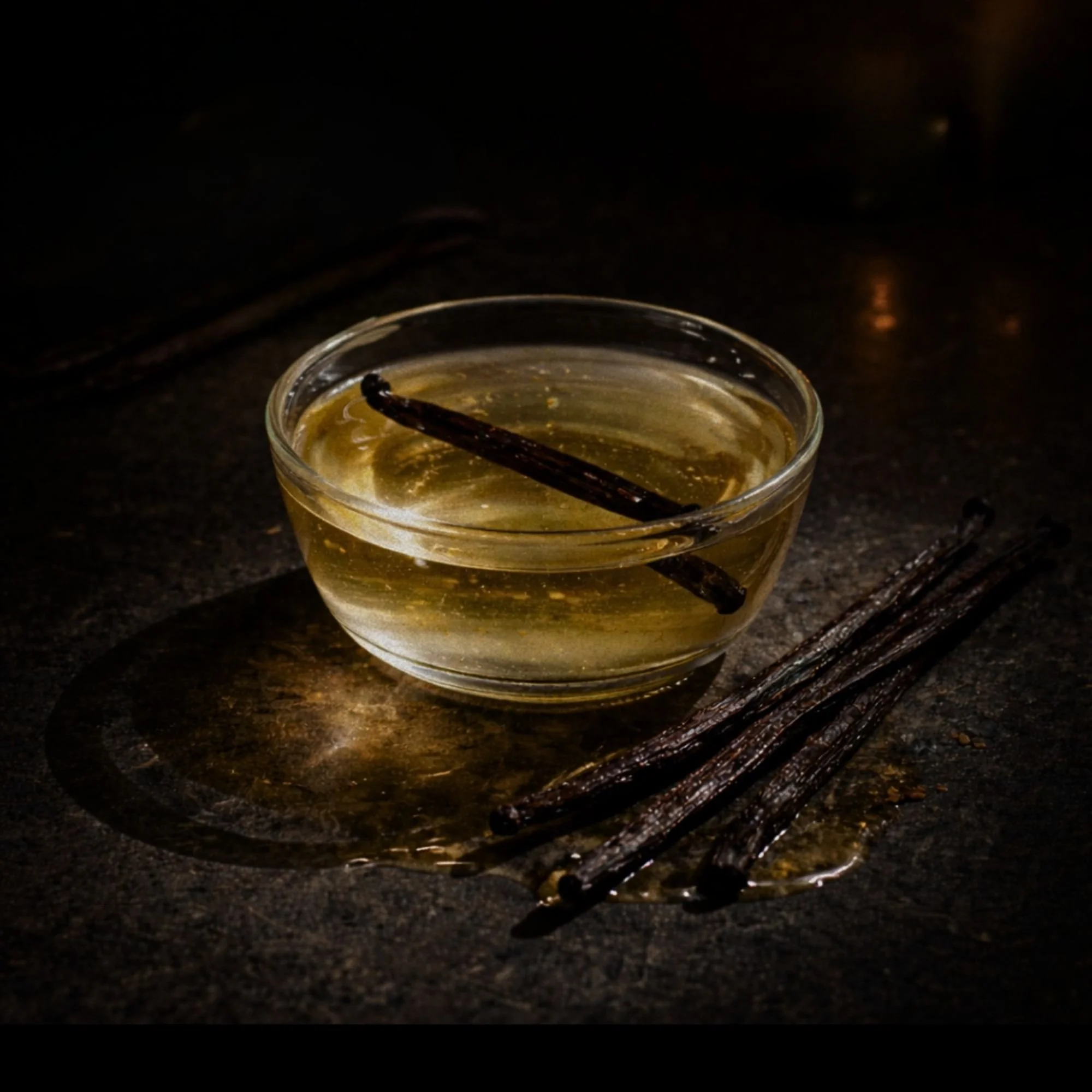
Vanilla, sugar, and soft infusion—carried in balance.
Vanilla supports without competing—softening structure while allowing surrounding flavors to remain clear.
Used lightly, it enhances moisture and balance without altering the overall composition.
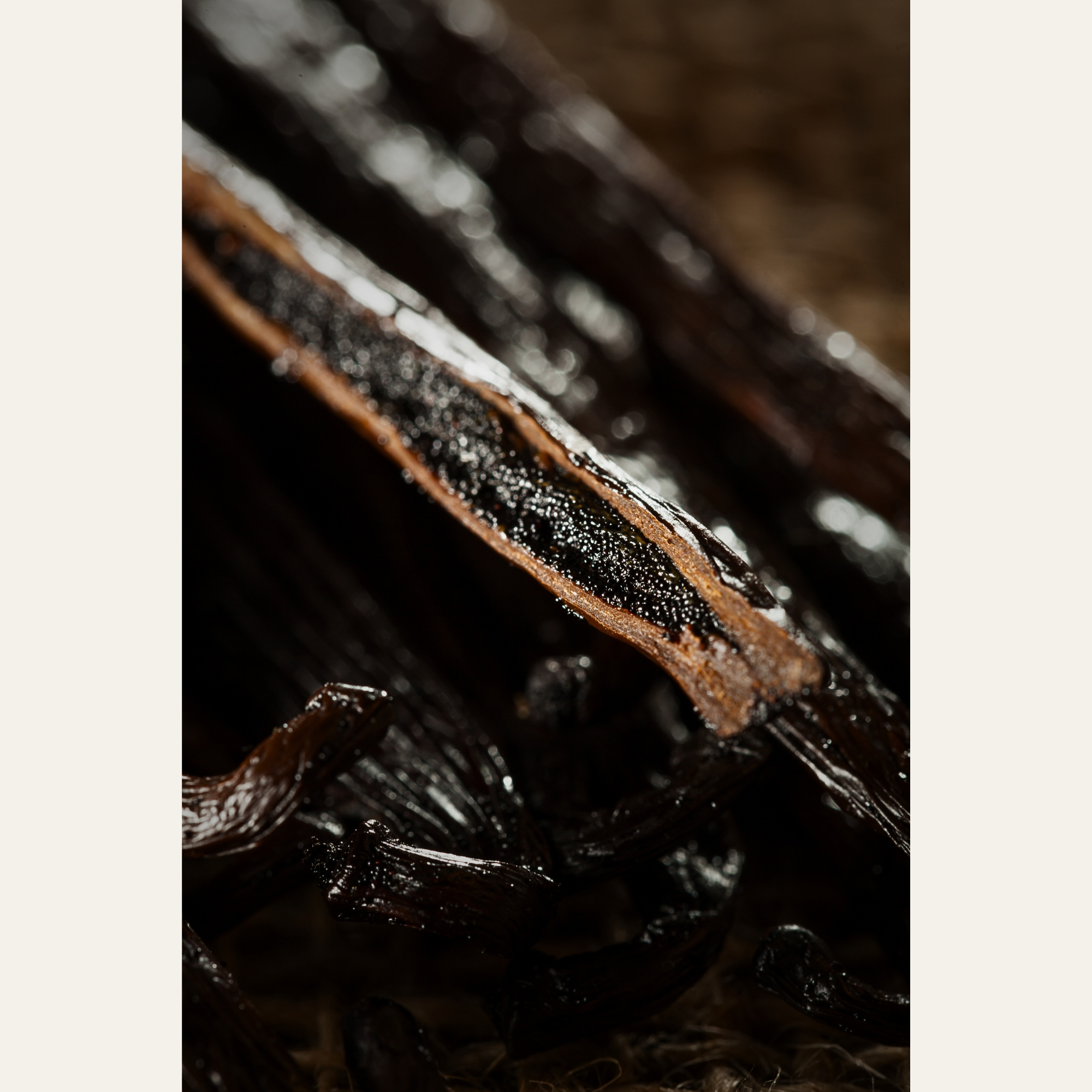
Vanilla Bean Reference
For a deeper vanilla profile, Madagascar vanilla beans or quality vanilla bean paste may be substituted for vanilla extract.
To use a whole vanilla bean:
• Place the bean on a cutting board.
• Using a sharp paring knife, carefully split the pod lengthwise.
• Open the pod and scrape the seeds from the interior using the back of the knife.
• Add both the seeds and the pod to warm liquids when infusing, or use the seeds directly within batters, creams, soaks, and ganache systems.
The scraped pod may also be reserved for infusing sugar, syrups, milk, cream, or future vanilla preparations.
Substitution Guide
• 1 Madagascar vanilla bean = approximately 1 tbsp vanilla bean paste
• 1 tbsp vanilla bean paste = approximately 1 tbsp pure vanilla extract
Ingredients
• 1 cup water
• ¼ cup granulated sugar
• 1 tsp vanilla extract, vanilla bean paste, or ½ vanilla bean, split and scraped
Instructions
• Combine water and sugar in a small saucepan.
• Heat gently, stirring until the sugar dissolves completely.
• Remove from heat and stir in vanilla extract or vanilla bean paste.
• If using a vanilla bean, add both the seeds and pod and allow to steep while cooling.
• Allow to cool completely before use.
• Remove vanilla pod before applying to the cake.
Application
Apply lightly between cake layers using a brush or spoon.
The goal is not saturation—but balance.
Moisture should be present without weight,
allowing the cake to remain soft while maintaining its structure.
The soak should support the composition, carrying softness without introducing contrast.
Note: Best used with neutral or lighter compositions where clarity of flavor is essential.
A quiet layer—holding moisture, balance, and softness within the structure.